Franchise development directors who understand what happens at each architectural phase, and what decisions get locked in, can manage timelines proactively rather than reacting to delays. This guide covers each phase in sequence, explains what franchise-specific decisions occur within it, and clarifies how each phase connects to the next.
Phase 1: Schematic Design (SD)
Schematic design is the phase where the brand-aligned architectural framework is established. It is the most consequential phase for franchise brands because the decisions made here — space planning, layout logic, brand expression strategy, and life safety approach — propagate through every subsequent phase and every subsequent location.
What happens in Schematic Design:
- Brand-aligned space planning: The floor plan is developed to accommodate the brand's operational flow, customer journey, and spatial identity. For franchise brands, this phase locks in the spatial logic that becomes the prototype baseline.
- Initial life safety and code strategy: The architect establishes the occupancy classification, egress strategy, and fire protection approach. Errors in this phase create expensive corrections downstream.
- Preliminary AHJ strategy: In franchise work, the architect should begin identifying jurisdiction-specific requirements early — before design development begins — to avoid redesign later.
- Prototype-to-site adaptation baseline: For location #2 and beyond, SD establishes how the prototype adapts to the specific site constraints without brand deviation.
What gets locked in at SD:
The fundamental space planning logic, occupancy classification, exit locations, and the brand expression framework. Changes after SD approval require redesign fees and extend the timeline. Franchise brands that change space planning during DD or CD phase add 4-8 weeks to the schedule, minimum.
Phase 2: Design Development (DD)
Design development is where the schematic design is refined into a fully resolved interior architecture package. Material selections are made, systems are coordinated, and the construction cost is aligned.
What happens in Design Development:
- Detailed interior architecture: Wall configurations, ceiling systems, flooring layout, millwork design, and fixture placement are fully resolved.
- Materials, finishes, and system selections: The full materials and finishes schedule is produced. For franchise brands, this is where prototype material standards are applied or adapted based on availability in the local market.
- Consultant coordination: Mechanical, electrical, plumbing, and structural consultants are integrated. Coordination errors found in DD cost a fraction of what they cost to resolve in CD or during construction.
- Value engineering support: Cost alignment with the construction budget. Franchise brands with a prototype benefit here — the cost data from previous locations informs value engineering decisions.
What gets locked in at DD:
Material specifications, millwork design, system configurations, and the consultant coordination matrix. The cost of changes increases significantly after DD completion. A brand that approves DD drawings with unresolved consultant coordination issues will face construction change orders.
Phase 3: Construction Documents (CD)
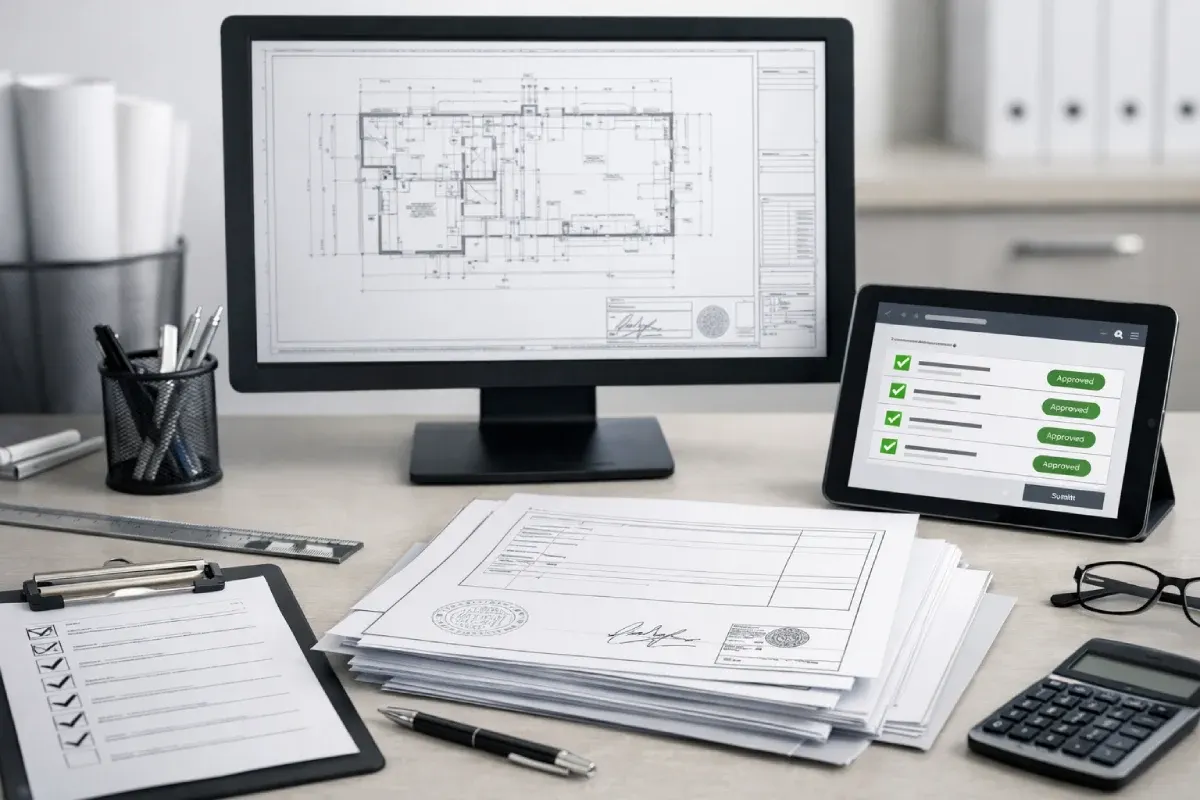
Construction documents are the full technical package from which the contractor will build. For franchise brands, CDs must be not only buildable but contractor-ready across different markets — meaning a contractor in Dallas and a contractor in Seattle can both execute the same package without field interpretation gaps.
What a permit-ready franchise CD package includes:
- Full architectural construction documents: Floor plans, reflected ceiling plans, elevations, sections, details, and specifications.
- Life safety and code compliance documentation: Egress plans, fire protection notes, occupancy load calculations, accessibility compliance documentation.
- Prototype adaptation and site-specific documentation: The CD package documents which elements are prototype standards and which are site-specific adaptations. This protects brand consistency during contractor bid and construction.
- Jurisdiction-specific drawing requirements: Different AHJs require different drawing content, sheet formats, and submittal package contents. A permit-ready package for Los Angeles is structurally different from one for Atlanta.
Permit-ready vs. standard CD package:
A standard CD package is built to be buildable. A permit-ready CD package is built to be approvable — which means it anticipates plan review comments, addresses known AHJ preferences in advance, and includes all required submittal documentation in the required format. Firms without jurisdiction-specific permit experience produce standard CDs that generate multiple rounds of plan review corrections.
Phase 4: Permitting and AHJ Coordination
Permitting is the phase where the architecture package is submitted to the Authority Having Jurisdiction for review and approval. For franchise brands, this phase is uniquely challenging because it runs differently in every market.
What full permitting and AHJ coordination includes:
- Permit submittal preparation: Packaging the CD set with all required cover sheets, forms, and jurisdiction-specific documentation.
- AHJ communication and coordination: Active management of the plan review process, including responding to reviewer questions before they become formal correction items.
- Response to plan review comments: Written responses to each plan review correction, with revised drawings where required. This is where inexperienced firms lose weeks — revision cycles that should take days stretch into months.
- Permit resubmittals and tracking: Managing resubmittal requirements, tracking status across multiple simultaneous projects, and escalating where expedited review is available.
How permitting affects opening timeline:
The permit phase is the most variable phase in the franchise rollout timeline. In a straightforward market with a complete permit-ready package, the permit cycle can run 3-6 weeks. In a complex jurisdiction with an incomplete package, it can run 3-6 months. The difference is almost entirely determined by the quality of the CD package and the firm's jurisdiction-specific experience.
How Each Phase Affects Total Timeline from Lease to Opening
A well-managed, prototype-based architecture process with experienced AHJ coordination runs approximately:
- Schematic Design: 2-4 weeks (faster for prototype-based adaptations than for new locations)
- Design Development: 3-5 weeks
- Construction Documents: 4-8 weeks (depending on site complexity and prototype adaptation requirements)
- Permitting: 3-12 weeks (depending on jurisdiction and package quality)
Total architecture-to-permit: approximately 12-29 weeks for a typical franchise location. Brands using a generalist firm without franchise-specific systems typically run 20-40% longer on the architecture phases and experience significantly higher permit revision cycles.
How Brand2Builds Manages the Full Architecture Process
Brand2Builds manages every phase from schematic design through permit issuance — with no handoffs and no accountability gaps. Our prototype-based process compresses SD and DD significantly for existing brands, and our AHJ overlay database reduces the permit cycle by front-loading jurisdiction-specific requirements into the CD package.
We are the architect of record in all 50 states. We have managed permit submissions across hundreds of markets for brands including Burger Fi, Pollo Tropical, Brooklyn Water Bagels, Safe Splash Swim School, and School of Rock.
Brand2Builds manages every phase of franchise architecture — from SD through permit issuance — in all 50 states. Contact us at brand2builds.com or call (1) 305 407 3514.