If you are an emerging franchisor with one to five locations and you are preparing to sell franchises or open additional corporate locations, the answer to 'Do I need a prototype before scaling?' is: yes, before you open location #2.
This guide explains what a prototype is, what it includes, why it matters, and what happens to franchisors who skip it — in plain language, without architecture jargon.
What Is a Franchise Prototype Design Package?
A franchise prototype is a complete set of architectural and design documents that defines the standard for a franchise location. It is the master document from which every future location is built.
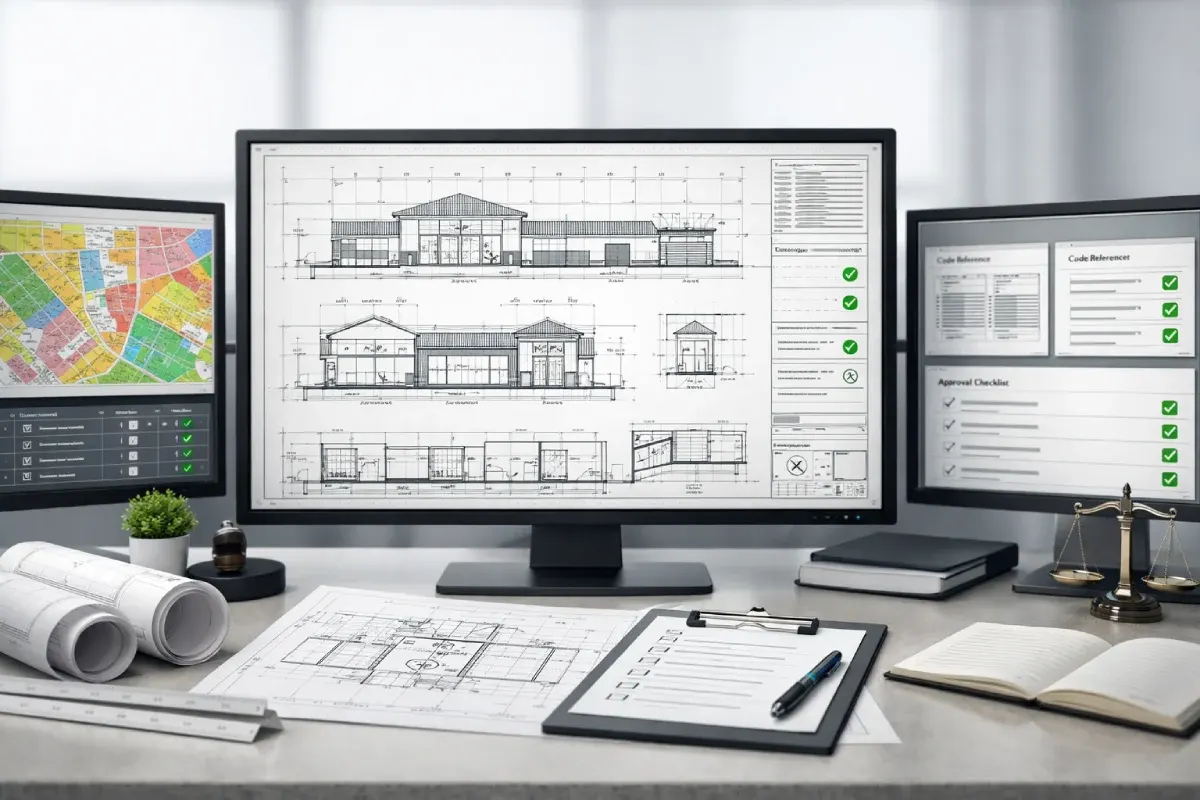
A complete prototype package includes:
- Architectural drawings: Floor plans, reflected ceiling plans, elevations, sections, and construction details that define how the space is configured and built.
- Interior design documentation: Materials and finishes schedule, millwork drawings, lighting specifications, and finish plans.
- Brand standards integration: Documentation of which design elements are brand non-negotiables versus which can be adapted to local conditions.
- Life safety and code documentation: Occupancy classification, egress plans, fire protection approach, and accessibility compliance documentation.
- Consultant coordination: Mechanical, electrical, plumbing, and structural integration documentation.
- Permit-ready package: A complete, jurisdiction-adaptable package that can be submitted for building permits in any US market with jurisdictional overlays applied.
The prototype is not a single drawing. It is a system — a documented, reproducible definition of what a location is.
Why Every Franchise Needs a Prototype Before Opening Location #2
Location #1 is a custom project. You designed it, built it, and it reflects a series of decisions made specifically for that site. Some of those decisions were intentional brand choices. Some were compromises forced by the site or the contractor. Some were defaults made because there was no standard to reference.
Location #2 will face the same questions. Without a prototype, the answers will be different — because the architect may be different, the contractor will be different, and the site will certainly be different. The result is two locations that look related but do not feel the same to customers.
With a prototype, location #2 starts from a defined standard. The brand decisions have already been made. The materials are already specified. The life safety approach is already documented. The design team is adapting a system to a site — not creating a new location from scratch.
The prototype is what converts a business into a franchise system.
What Happens When a Franchise Scales Without a Prototype
The consequences of scaling without a prototype are consistent across franchise brands, and they compound with every new location:
- Brand inconsistency that is visible to customers: Customers who visit multiple locations notice when they do not feel the same. In competitive categories, that inconsistency is experienced as a brand quality signal — not a positive one.
- Higher architecture costs per location: Without a prototype, every location is a custom design project. Custom projects cost more than prototype adaptations — typically 30-60% more in design fees for comparable locations.
- Longer timelines: Starting every location from scratch adds 6-12 weeks to the design phase. At 10 locations per year, that is a meaningful competitive disadvantage.
- Contractor interpretation errors: Without precise construction documents, contractors make field decisions. Those decisions reflect what is easy or familiar to the contractor — not what is right for the brand.
- Franchisor liability: When a franchisee builds a location using a vague or incomplete design standard and the result does not meet FDD representations, the franchisor is exposed. A documented prototype is the legal definition of the brand standard.
Prototype Design vs. Brand Style Guide: What Is the Difference?
This is one of the most common points of confusion for emerging franchisors.
A brand style guide defines your visual identity: logo usage, color codes, typography, graphic standards, and photography direction. It answers the question: 'What does our brand look like in two-dimensional applications?'
A franchise prototype design answers the question: 'How do we build a location that embodies our brand in three dimensions, complies with building codes in any market, and can be executed by a contractor who has never worked with our brand before?'
A brand style guide tells a designer what colors to use. A prototype tells an architect exactly what material, in what specification, on which surface, at what dimension — documented at the level of precision required to pull a building permit.
Both are necessary. They answer different questions. Neither replaces the other.
How to Know If Your Current Prototype Is Complete
Many emerging franchisors have something they call a prototype but that is missing components that matter for scaling. Your current prototype is complete if it includes all of the following:
- A full set of construction documents, not just floor plans or concept drawings.
- A materials and finishes schedule with specification-level detail — not just 'wood-look flooring' but the specific product, manufacturer, and colorway.
- A documented brand standards matrix that separates non-negotiable brand elements from adaptation variables.
- Life safety documentation reviewed against multiple occupancy scenarios, not just your first location's configuration.
- A permit-ready package that has been adapted to at least two different jurisdictions successfully.
If any of those are missing, you have a starting point — not a complete prototype. Scaling without the missing components will produce the same problems as scaling without a prototype at all, just more slowly.
How Brand2Builds Builds Prototypes for Emerging Franchisors
Brand2Builds has developed franchise prototypes for emerging franchisors from their first expansion through multi-state rollouts. We build prototypes that are complete from the start — construction documents, interior design documentation, brand standards matrix, life safety documentation, and a permit-ready package — so that every location that follows is faster, cheaper, and more consistent than the one before.
Our prototype process is designed specifically for franchisors with 1-5 units who are preparing to scale. We know where the gaps typically are, and we close them before the first franchise agreement is signed.
Ready to build your franchise prototype before you start scaling? Brand2Builds specializes in prototype design for emerging franchisors. Visit brand2builds.com or call (1) 305 407 3514.
Frequently Asked Questions About Franchise Prototype Design
What is franchise prototype design?
Franchise prototype design is the process of creating a comprehensive, reproducible architectural and design package that defines the standard for how a franchise location should be built — including construction documents, interior design specifications, brand standards documentation, and life safety compliance.
When should I commission a franchise prototype?
Before opening location #2. The prototype should be built from location #1 (or in parallel with it), so that every subsequent location begins from a defined standard rather than a custom process.
How much does franchise prototype design cost?
Prototype design costs vary based on location size, design complexity, and the completeness of the existing brand documentation. The more important cost comparison is prototype design vs. the cumulative cost of inconsistent per-location design fees, extended timelines, and brand correction costs across 10 or 20 locations.
Who owns the prototype?
You should own the prototype documents outright. If an architecture firm retains ownership of your prototype, you are permanently dependent on that firm for every future location. Ownership of the prototype is a fundamental term to establish before the design engagement begins.