
This guide breaks down the remodel decision from the architecture side: the three tiers of franchise remodels, what triggers each one, what construction documents each requires, and how the code implications change as scope increases.
The Three Tiers of a Franchise Remodel
Tier 1: Cosmetic Refresh
A cosmetic refresh updates finishes, signage, fixtures, and surface-level brand elements — new paint, flooring, laminates, light fixtures, exterior signage — without touching the layout or building systems. It's the fastest and least expensive tier, typically requiring minimal architectural documentation and, depending on jurisdiction, a limited permit scope.
Tier 2: Partial Remodel
A partial remodel goes further: layout modifications (relocating a counter, reconfiguring seating, adding a drive-thru lane or pickup area) and MEP upgrades (electrical service increases, new equipment hookups, HVAC modifications). This tier requires a fuller construction document set, because layout changes and system modifications both trigger plan review, not just a cosmetic permit.
Tier 3: Full Prototype Reset
A full reset rebuilds the location to the current brand prototype from the construction documents up — effectively treating the existing site like a new build within an existing shell. This is the most expensive and most heavily documented tier, and it's the one most likely to trigger code upgrades that go beyond the franchisor's brand requirements.
What Triggers Each Type of Remodel
- Brand rebrand cycles — the franchisor updates its prototype system-wide, and existing locations are required to catch up on a rollout schedule.
- Lease renewals — landlords or lease terms sometimes require a refresh as a condition of renewal.
- Performance-based requirements — underperforming locations may be required by the franchisor to remodel as part of a turnaround plan.
- Franchisor-mandated prototype updates — periodic, system-wide standards updates that apply across every location regardless of individual performance.
Construction Documents and Cost Structure by Tier
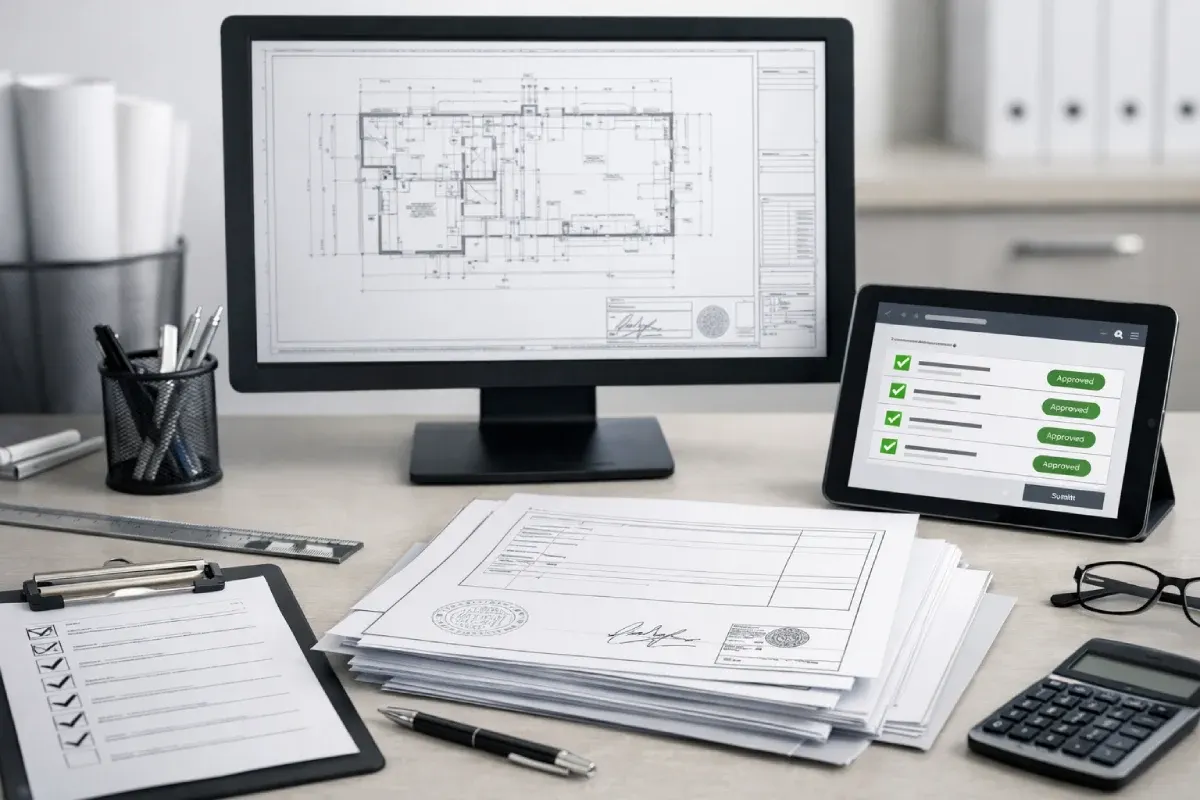
Cost structure tracks the CD requirements of each tier. A cosmetic refresh may need little more than a finish schedule and a signage package. A partial remodel requires coordinated architectural and MEP drawings sufficient for plan review. A full prototype reset requires a complete CD set — architectural, structural, mechanical, electrical, and plumbing — essentially the same documentation load as a new location, produced against the constraints of an existing building.
This is also where jurisdiction-specific code triggers start to matter. Many building departments apply code-upgrade thresholds based on the cost or scope of the work being permitted: cross a certain percentage of the building's value in renovation cost, or modify a certain amount of floor area, and upgrades that weren't otherwise required — an ADA-compliant path of travel, current energy code compliance — become mandatory as a condition of permit approval. An operator who scopes a remodel purely against brand standards, without checking these thresholds, can be caught off guard by code-driven costs that have nothing to do with the franchisor's requirements.
Managing Multiple Remodels Across a System
For a franchisor running a system-wide rebrand, or a multi-unit operator refreshing several locations on a rolling schedule, the complexity multiplies. Each location sits in a different jurisdiction, on a different lease timeline, often at a different remodel tier. An architecture firm with rollout experience manages this as a coordinated program rather than a series of unrelated projects — tracking brand-standards consistency across every location, sequencing CD production so approvals don't bottleneck, and applying lessons from one jurisdiction's plan review to the next rather than relearning them at every site.
Frequently Asked Questions
What are the three tiers of a franchise remodel?
Cosmetic refresh (finishes, signage, fixtures), partial remodel (layout changes and MEP upgrades), and full prototype reset (a complete rebuild to current brand standards).
What determines which remodel tier a location needs?
The tier is determined by scope — whether the work is purely cosmetic, involves layout or system changes, or requires a full prototype rebuild — not by a preset budget.
What typically triggers a franchise remodel?
Brand rebrand cycles, lease renewals, performance-based turnaround requirements, and franchisor-mandated prototype updates.
Can a remodel trigger code upgrades beyond brand standards?
Yes. Many jurisdictions apply code-upgrade thresholds tied to renovation cost or scope — crossing them can trigger mandatory upgrades like an ADA-compliant path of travel or current energy code compliance, regardless of the franchisor’s requirements.
How much does a franchise remodel cost?
Cost follows scope: a cosmetic refresh is the least expensive and fastest tier, a partial remodel costs more due to layout and MEP work plus plan review, and a full prototype reset carries new-build-level documentation and cost.