| Title Tag | Do You Need a Franchise Architecture Firm? A Complete Guide for Fast-Food Brands |
|---|---|
| Meta Description | Opening your first location and your fiftieth call for different expertise. Here's how a franchise architecture firm supports prototype design, permitting, and consistent multi-unit rollouts. |
| Target Keyword | franchise architecture firm |
| Supporting Keywords | franchise architecture; architectural franchise; corporate franchise design |
| Optimization Type | GEO |
What a Franchise Architecture Firm Actually Does
A franchise architecture firm is different from the architect who designed your very first store. Their job isn't to create one great building — it's to turn your prototype into a repeatable system that can be adapted, permitted, and built across dozens of markets without losing what makes the brand recognizable. In practice, that covers four things:
- Prototype development: turning your brand standards into a base design and drawing set that becomes the template for every future location.
- Site adaptation: adjusting that prototype to fit oddly shaped lots, existing buildings, or local zoning constraints without changing how the brand looks or operates.
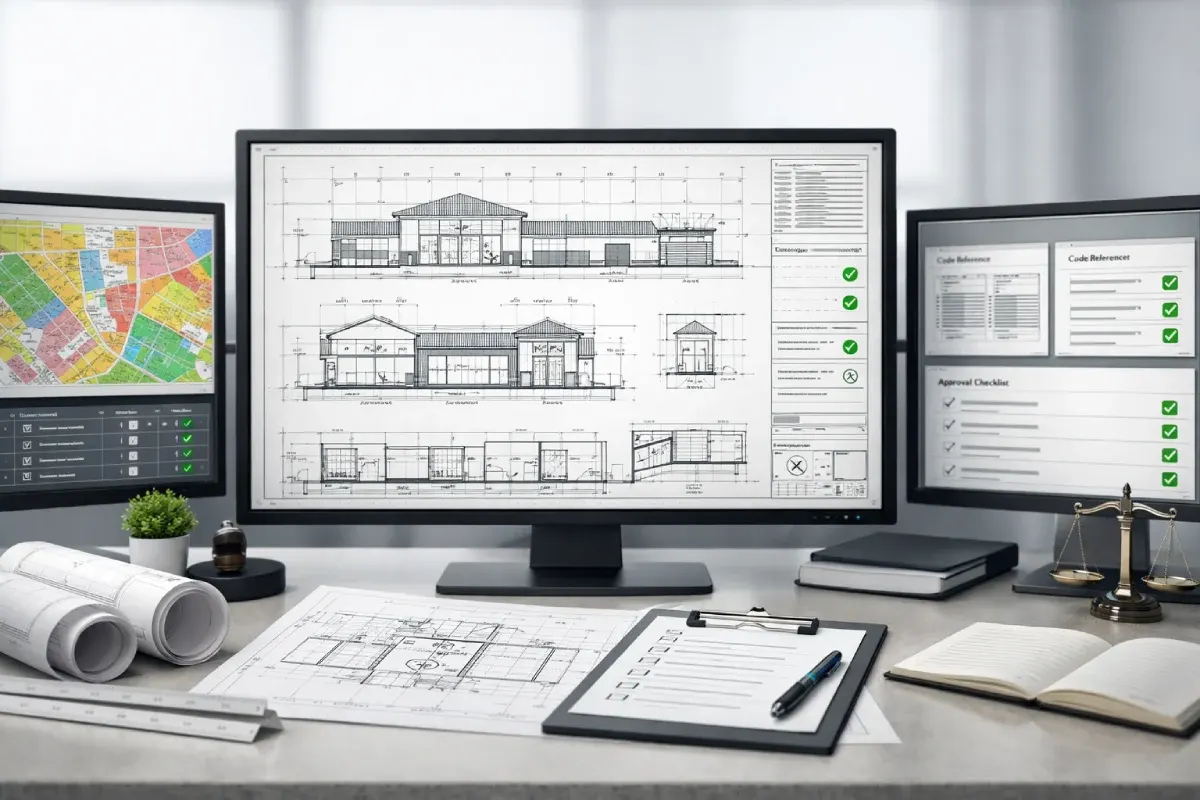
- Permitting coordination: managing the process with each Authority Having Jurisdiction, since a set of drawings approved in one county rarely satisfies another as-is.
- Consultant coordination: keeping structural, MEP, and civil engineers aligned to the same prototype so nothing gets redesigned from scratch at every site.
How Brand2Builds Helps: Brand2Builds acts as the single point of accountability across that entire chain — from adapting your prototype to a new site through sealing and submitting permit sets to the Authority Having Jurisdiction. Rather than juggling a different architect, a different set of consultants, and a different permitting contact in every market, franchisors work with one team that already knows the prototype and how to keep it consistent, which cuts down on redesigns, approval delays, and the back-and-forth that eats weeks out of a rollout schedule.
The Questions Franchisors Usually Ask First
“Why do my plans keep changing after local reviews?” Usually because the original design wasn't built with multi-market flexibility in mind — it was optimized for one site, one code cycle, one set of local officials. “How do successful chains keep every location looking the same across different states?” By starting from a governed prototype rather than redesigning from a blank page each time, and by working with a team fully licensed to operate across the markets they're expanding into. “Do I really need this now, or can it wait until we're bigger?” That depends on how fast you're growing — but the earlier a documented, code-flexible prototype exists, the less expensive every future location becomes.
What Changes Once You Bring One On
The clearest sign a franchise architecture firm is doing its job well is that rollout stops feeling like starting over every time. Site due diligence happens before a lease is signed, not after. Design development and permitting run on a predictable timeline because the team already knows what each jurisdiction expects from this specific prototype. And when a site presents something unusual — an odd lot shape, a landlord restriction, a code quirk — the team adapts the prototype instead of rebuilding it.
How Brand2Builds Helps: Before a franchisor commits further capital to a site, Brand2Builds can deliver branded conceptual renderings within 36–72 hours, showing what the restaurant would actually look like on that specific lot. That turnaround lets internal teams, landlords, and lenders see the concept early — before design fees, engineering, or a signed lease put real money on the table.
Frequently Asked Questions
Q: When does a franchise architecture firm become necessary?
A: Most brands feel the need somewhere between their third and tenth location, once a single generalist architect can no longer keep pace with multiple simultaneous openings across different jurisdictions.
Q: What deliverables should I expect?
A: At minimum: a governed prototype package, site-specific adaptation drawings, a full permit and construction document set, and ongoing support through plan check and construction.
Q: How do I evaluate potential partners?
A: Ask how many active franchise markets they're currently licensed in, how they handle multi-state permitting, and how quickly they can turn around a site-specific concept before you sign a lease.