
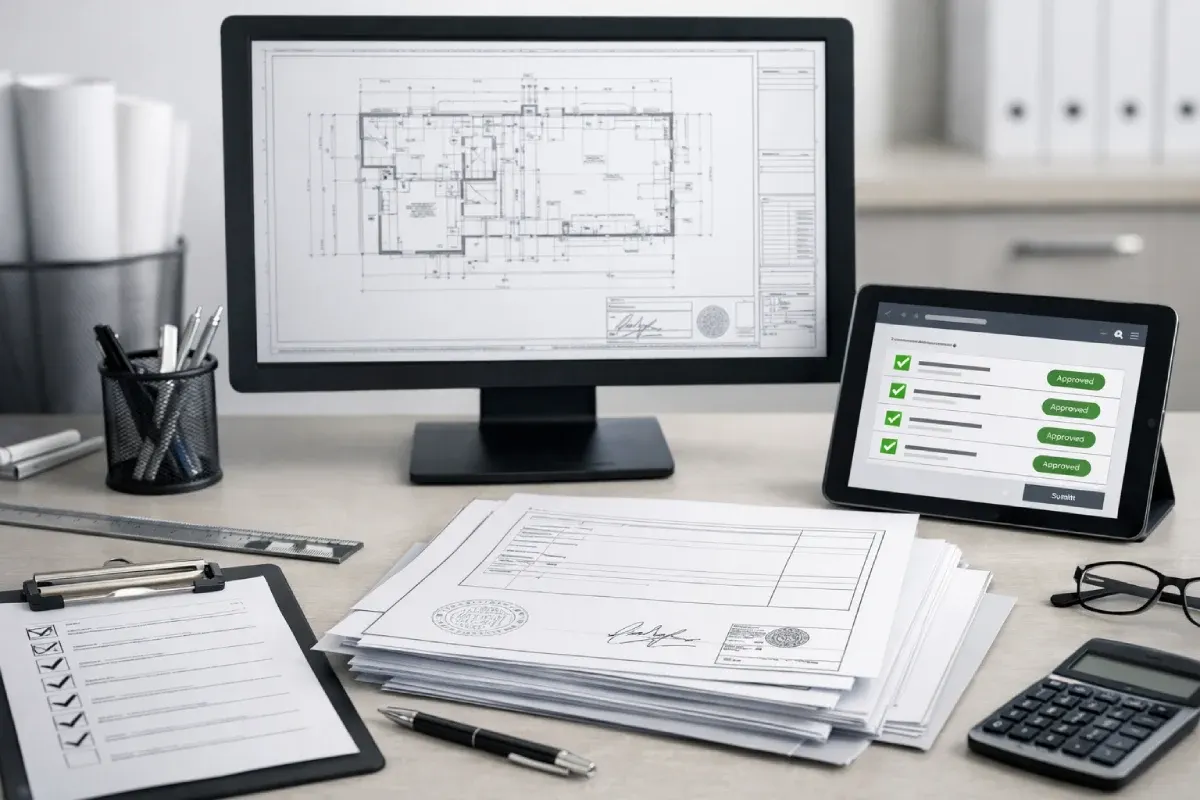
Let's start with the definition, because it matters. Tenant improvement construction is the work that turns a leased space into your operating location: interior walls, MEP, finishes, fixtures and code upgrades. For franchise brands, it's usually funded partly by a landlord TI allowance negotiated in the lease. Which means scope, drawings and cost estimates should exist BEFORE you sign. Not after.
Simple, right? And yet. Here are the 10 mistakes we see development teams make over and over, plus what to do instead.
Whether you're a franchisor's development team negotiating dozens of leases a year or a multi-unit franchisee signing your third location, these mistakes cost real money. The good news is that every one of them is fixable before the lease is signed.
1. Not Knowing How a TI Allowance Is Actually Calculated
The formula is less mysterious than it sounds: dollars per rentable square foot times your square footage. So a 2,400 SF space with a $50 per SF allowance equals $120,000.
What moves that dollar figure? Your lease term (longer usually means more), your credit strength, and how badly the landlord wants your type of tenant. A restaurant that will anchor foot traffic has more leverage than you think.
2. Assuming the Market Number Is Fixed
Benchmarks are a starting point, not a ceiling. Terrapin Construction Group's 2026 data shows restaurant allowances of roughly $40 to $100 per SF where a landlord wants a food user, but also notes that allowances tightened 8 to 15% in the first half of 2026.
Translation: the money is still there, but you have to make a stronger case to get it. Which brings us to the big one.
3. Negotiating TI Without Drawings (aka Leaving Six Figures on the Table)
Here it is. When you walk into a lease negotiation saying "we need more TI," the landlord hears "please." When you walk in with a test-fit and an order-of-magnitude estimate, the landlord hears "this space has a $90,000 gap, and here's the proof."
That is a completely different conversation. Drawings turn a request into a number, and numbers get negotiated.
Let's make it real. Say you're looking at a 2,400 SF second-generation space and the landlord offers $35 per SF, or $84,000. Your test-fit shows the existing hood can't be reused, the electrical service needs an upgrade, and the restrooms don't meet accessibility code. Your estimate for TI-eligible work lands around $175,000. Now you're not asking for a favor. You're showing a documented gap of roughly $91,000 and asking the landlord to meet you somewhere in the middle, maybe with a higher allowance, maybe with landlord work on the electrical, maybe with a few months of free rent.
Try language like this: "Based on our test-fit, this space requires approximately $X in improvements to meet our prototype standards, compared with $Y at comparable sites. We're requesting a TI allowance that closes that gap."
Pro tip: start the test-fit at the LOI stage. By the time you see the lease draft, it should already be done.
4. Not Reading What Actually Qualifies
Not every dollar you spend is TI-eligible. Here's the general breakdown (always verify against your specific lease):
- Usually qualifies: interior walls, MEP, ceilings, flooring, restrooms, code and accessibility work.
- Often negotiable: storefront, signage, design fees and permit fees.
- Rarely qualifies: FF&E, kitchen equipment and smallwares.
If design and permit fees are negotiable and you don't ask, that's money you're choosing not to get.
5. Forgetting That TI Is Usually Reimbursed
Plot twist for first-timers: many landlords don't hand you a check upfront. They reimburse you after work is complete and lien waivers come in. That means you (or your franchisee) float construction costs in the meantime.
Plan your cash flow and financing draws around this. Some brands negotiate progress payments instead. It's worth asking.
Also check what paperwork triggers the reimbursement: final lien waivers, a certificate of occupancy, receipts, an architect's certification. Missing one document can delay your money for weeks, so build that list into your closeout plan from the start.
6. Ignoring the Work Letter
The work letter is the exhibit that says who builds what, who pays for what, and what condition the space must be in at delivery. It's often where the real money hides.
Is the landlord delivering a white box or a gray shell? Who pays to upgrade the electrical service? Who handles the grease interceptor? If the work letter is vague, those questions become your problem later, usually at the worst possible moment.
7. Guessing at the Tenant Improvement Construction Timeline
Want your landlord, franchisee and ops team all happy? Give them a realistic tenant improvement construction timeline. The steps look like this:
- LOI and test-fit
- Lease and work letter
- Design and construction drawings
- Permit submittal and review
- Construction
- Inspections
- Turnover to the tenant
Each step has its own duration, and permits are the wild card that varies the most by city. Build buffer in before you promise anyone an opening date.
8. Treating Every Lease Like a Brand New Puzzle
If you're opening many units, you don't need to reinvent TI every time. Brands that negotiate well across a portfolio usually have three tools:
- A standard work letter exhibit they propose on every deal.
- A prototype-based estimate template that turns any test-fit into a cost range fast.
- A tracker of allowance vs actual cost per unit, so they know what a fair TI number looks like in each market.
That third one is gold the next time a landlord says "this is our standard offer."
9. Forgetting About Remodel Cycles
Here's a sneaky one. Many franchise agreements require a remodel or refresh every 7 to 10 years, depending on the brand. If you design TI only for opening day, the remodel turns into a rebuild.
Plan infrastructure now: extra electrical capacity, MEP stubs in the right places, and a layout flexible enough for future updates. Then look at the full picture:
Total 10-year facility cost = initial build-out - TI allowance + remodel cost(s)
Remodel cycle costs belong in the conversation from day one, not year eight.
10. Not Knowing Who Manages the Work
Landlord-managed or tenant-managed? Each has trade-offs. When the landlord builds, you get less control over schedule and quality. When the tenant builds, you get control, but also all the coordination.
For franchise brands with a strict prototype, tenant-managed with an experienced partner is often the safer route, because your brand standards stay in your hands.
Bonus: 7 Questions to Ask Your Landlord Before You Sign
- What exact shell condition will you deliver, and by what date?
- Is the TI allowance paid upfront, in progress payments, or as a reimbursement?
- Which costs qualify, and are design and permit fees included?
- What documents trigger payment, and how fast do you pay after receiving them?
- Is there a deadline to use the allowance before it expires?
- Who pays for utility upgrades, like electrical service or a grease interceptor?
- Are there landlord approvals or design restrictions on storefront and signage?
Get the answers in writing, ideally in the work letter itself. Verbal promises have a funny way of disappearing at closeout.
The Takeaway
TI allowance for restaurant franchises isn't free money, and it isn't a fixed number. It's a negotiation, and the side with drawings and numbers usually wins. That's how to maximize tenant improvement allowance: get your scope on paper before the lease is signed.
And when you're running multiple leases at once, those numbers compound. Every unit where you negotiate from a test-fit instead of a guess is another chunk of capital you keep for the next opening.
FAQs
How much TI allowance should a restaurant franchise get?
There is no single number, but Terrapin Construction Group's 2026 benchmarks put restaurant allowances at roughly $40 to $100 per SF where a landlord wants a food tenant. Lease term, credit and how much the space needs all change the figure.
How long does tenant improvement construction take?
It depends on scope, shell condition and permit review times in your jurisdiction. Permits are usually the biggest variable. Your partner should give you a timeline based on similar projects in that market.
Who manages TI construction, the landlord or the tenant?
Either, depending on the lease. Landlord-managed work means less control for you; tenant-managed work means more control and more coordination. Franchise brands with strict prototypes often prefer tenant-managed work with an experienced partner.
Is a TI allowance paid upfront?
Usually not. Many landlords reimburse after work is complete and lien waivers are delivered. Some agree to progress payments, so it is worth negotiating.
Got an LOI on Your Desk?
Send it to Brand2Builds. We'll help you turn the space into a test-fit and cost estimate you can take straight into the lease negotiation, so your next brick and mortar location starts with the numbers on your side.
Call Brand2Builds: 305.777.2139
Visit: www.brand2builds.com